
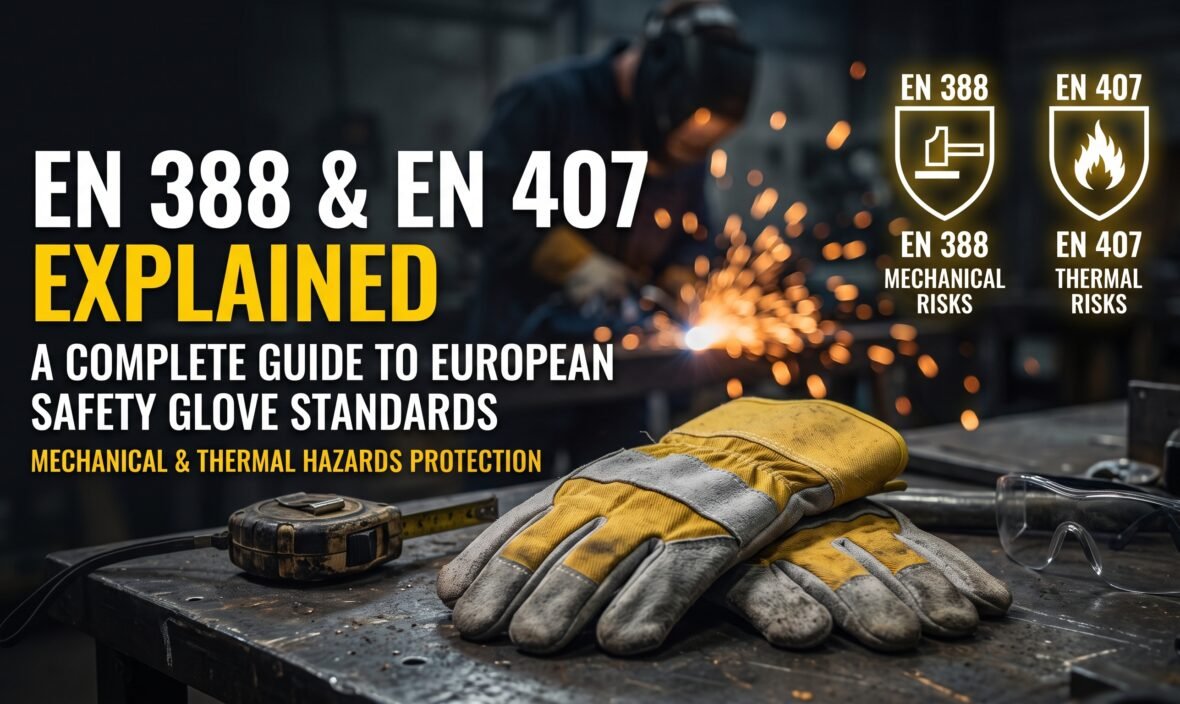
Choosing the right safety gloves is more than just picking a durable material; it’s about ensuring compliance with strict international safety regulations. For industries operating in the UK and Europe, understanding European Safety Glove Standards is legally required and crucial for worker protection.
When purchasing industrial hand protection—especially for high-risk jobs like welding, construction, or heavy manufacturing—you will frequently encounter two critical certifications: EN 388 and EN 407.
But what exactly do these numbers and symbols mean? In this complete guide, we will break down both standards so you can make informed, compliant purchasing decisions for your workforce.
What is the EN 388 Standard? (Protection Against Mechanical Risks)
The EN 388 standard applies to safety gloves that protect against mechanical hazards. You can identify this standard by a shield symbol featuring a hammer, followed by four numbers and one or two letters.
These characters represent the glove’s performance rating across six different mechanical tests. The higher the number or letter, the greater the protection.
Here is how to read an EN 388 rating (e.g., 4X43EP):
- Abrasion Resistance (1-4): Measures how many cycles the glove material can withstand under constant friction. A rating of 4 offers the highest abrasion resistance, ideal for handling rough materials.
- Blade Cut Resistance – Coupe Test (1-5 or X): Measures how much continuous cutting the glove can endure. (Note: If the blade gets blunt during testing, an “X” is used, and the ISO Cut Test letter becomes the primary cut rating).
- Tear Resistance (1-4): Indicates the force required to tear the glove material apart. High tear resistance is crucial for heavy-duty rigger gloves.
- Puncture Resistance (1-4): Measures the force needed to pierce the glove with a standard-sized point.
- ISO Cut Resistance (A-F): Introduced in the 2016 update, this test measures the exact weight (in Newtons) required for a straight blade to cut through the material. ‘A’ is the lowest, and ‘F’ provides maximum cut protection.
- Impact Protection (P): If the glove features impact-absorbing bumpers (common in heavy mining or mechanic gloves), it will have a ‘P’ at the end of the code.
What is the EN 407 Standard? (Protection Against Thermal Risks)
If your workers are exposed to heat, flames, or molten metal—such as in welding, smelting, or glass manufacturing—the gloves must meet the EN 407 standard.
This standard is represented by a flame symbol followed by six numbers. Each number corresponds to a specific heat resistance test, scored from 1 to 4 (with 4 being the highest level of protection).
Here is the breakdown of the six EN 407 testing categories:
- Burning Behaviour (Flammability): Measures how long the glove continues to burn or glow after being exposed to an open flame for 15 seconds.
- Contact Heat: Measures the temperature range (from 100°C to 500°C) the glove can withstand for at least 15 seconds before the wearer feels a 10°C rise in temperature.
- Convective Heat: Measures how long the glove can delay the transfer of heat from an open flame to the user’s skin.
- Radiant Heat: Tests the time it takes for radiant heat (like heat radiating from a furnace or molten metal) to penetrate the material.
- Small Splashes of Molten Metal: Essential for welders. This measures the number of molten metal drops the glove can repel before the inside temperature rises significantly.
- Large Quantities of Molten Metal: Indicates how much molten metal the glove can withstand before the material is destroyed or the skin is burned.
Why Do These Standards Matter for Your Business?
For procurement managers and business owners in Europe, the UK, and Australia, buying non-compliant PPE is a serious legal and financial risk.
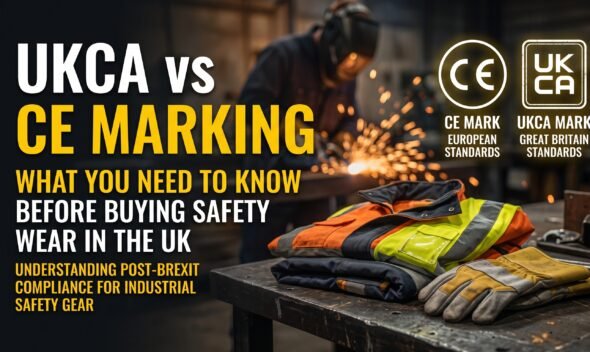
- Legal Compliance: In Europe and the UK, safety wear must carry the CE or UKCA mark, proving they meet EN 388 and EN 407 directives.
- Reduced Workplace Injuries: Properly rated gloves prevent costly workplace accidents, reducing downtime and compensation claims.
- Cost-Effectiveness: Understanding these ratings helps you buy the right glove for the specific job. You won’t overspend on extreme heat-resistant gloves if your workers only need high abrasion resistance.
Trust Blue Star International for Compliant Hand Protection
At Blue Star International, we understand that protection performs best when it meets global standards. Whether you need heavy-duty TIG/MIG Welding Gloves engineered to withstand severe thermal risks (EN 407) or robust Rigger Gloves designed for maximum abrasion and tear resistance (EN 388), our manufacturing processes prioritize your safety.
We use premium-grade grain and split leathers to ensure that our safety wear not only meets international compliance but also offers unparalleled comfort and durability for long shifts.
Ready to upgrade your workplace safety? Browse our full range of Safety Gloves or Contact Us today to discuss bulk orders and export options tailored to your industry’s specific hazard requirements.

Leave a comment