
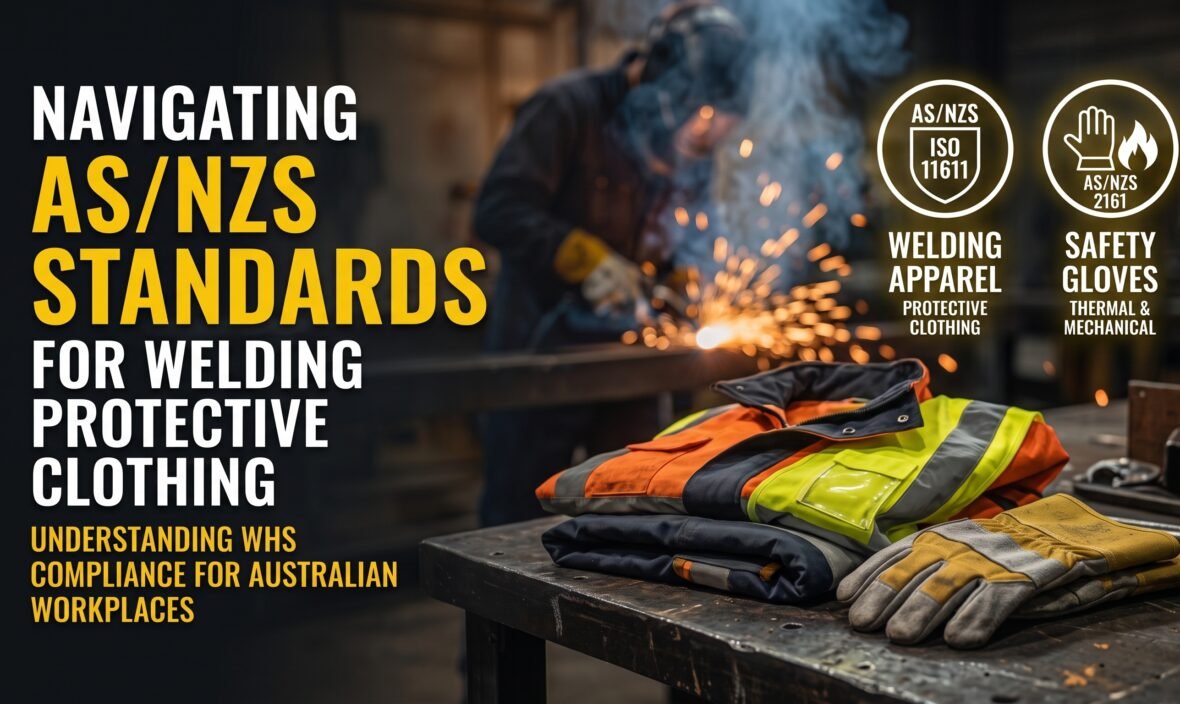
For industries operating in Australia, workplace safety is heavily regulated by strict Work Health and Safety (WHS) laws. When it comes to high-risk environments like welding, smelting, and heavy fabrication, providing the right personal protective equipment (PPE) isn’t just a best practice—it is a legal requirement.
If you are a procurement manager, safety officer, or business owner sourcing welding gear for the Australian market, you need to understand the AS/NZS (Australian/New Zealand Standards).
Unlike general workwear, welding apparel must protect against extreme heat, molten metal spatter, and intense UV radiation. Here is a complete guide to navigating the AS/NZS standards so you can purchase fully compliant welding protective clothing.
The Core Standard: AS/NZS ISO 11611 (Protective Clothing for Welding)
In Australia, the primary standard governing welding garments—such as welding jackets, aprons, and trousers—is AS/NZS ISO 11611 (which directly adopts the international ISO 11611 standard).
This standard ensures that the clothing provides adequate protection against minor molten metal splashes, short-duration contact with flames, and radiant heat from the welding arc.
Under this standard, welding clothing is divided into two distinct classes based on the level of protection they offer:
Class 1: Light Welding Operations
- Best For: TIG welding, gas welding, and micro-plasma welding.
- Protection Level: Designed for lower-hazard welding situations where there is less risk of molten spatter and lower radiant heat.
- Material Characteristics: Usually more flexible and breathable, offering comfort for precise work while still providing essential flame resistance.
Class 2: Heavy-Duty Welding Operations
- Best For: MIG welding, MMA (stick) welding, and plasma cutting.
- Protection Level: Built for high-hazard environments. These garments must withstand significantly more molten metal drops and higher levels of radiant heat.
- Material Characteristics: Typically made from thick, premium-grade split leather or heavy-duty flame-retardant treated cotton to prevent burn-through.
Hand Protection: Navigating AS/NZS 2161
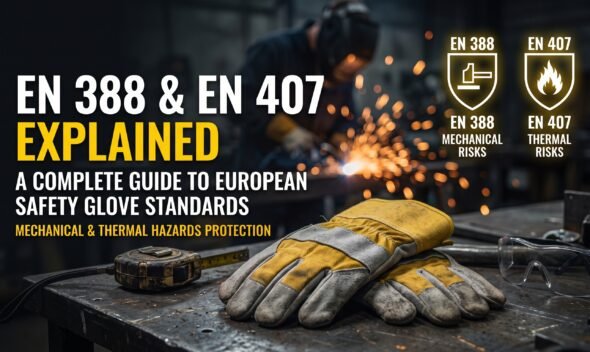
While jackets and aprons protect the body, a welder’s hands are closest to the hazard. In Australia, protective gloves must meet the AS/NZS 2161 series of standards, which are closely aligned with European EN standards:
- AS/NZS 2161.3 (Mechanical Risks): Equivalent to EN 388, this tests the glove’s resistance to abrasion, blade cuts, tearing, and punctures. High tear resistance is critical for heavy metal handling.
- AS/NZS 2161.4 (Thermal Risks): Equivalent to EN 407, this ensures the gloves can withstand flammability, contact heat, convective heat, radiant heat, and molten metal splashes.
When sourcing welding gloves for Australian sites, always ensure they pass both the mechanical and thermal testing criteria.
What to Look for When Buying Compliant Welding Gear
Meeting standards is the baseline, but the quality of construction dictates how long the gear will last on site. When ordering protective clothing, look for these premium features:
- Kevlar® Stitching: Standard cotton threads will burn and snap under welding sparks. High-quality welding jackets and gloves should be stitched with heat-resistant Kevlar® or aramid threads to prevent seams from splitting.
- Premium Leather: Cowhide split leather is the industry standard for Class 2 heavy-duty welding due to its exceptional durability and natural heat resistance. For Class 1 (TIG) welding, grain leather provides the needed flexibility.
- Secure Closures: Jackets should feature insulated snaps or Velcro closures rather than exposed metal zippers, which can heat up and burn the wearer.
Ensure Your Workplace is WHS Compliant
Failing to provide AS/NZS-compliant gear can result in severe workplace injuries, hefty fines from Safe Work Australia, and legal liabilities. Protecting your team starts with sourcing reliable, certified PPE from trusted manufacturers.
Our complete range of industrial protective wear—from heavy-duty split leather welding jackets to precision TIG/MIG gloves—is rigorously tested to meet global safety expectations, ensuring your workers stay safe and your business stays compliant.
Contact Our Exports Team today to discuss your specific PPE compliance needs for the Australian market.

Leave a comment