
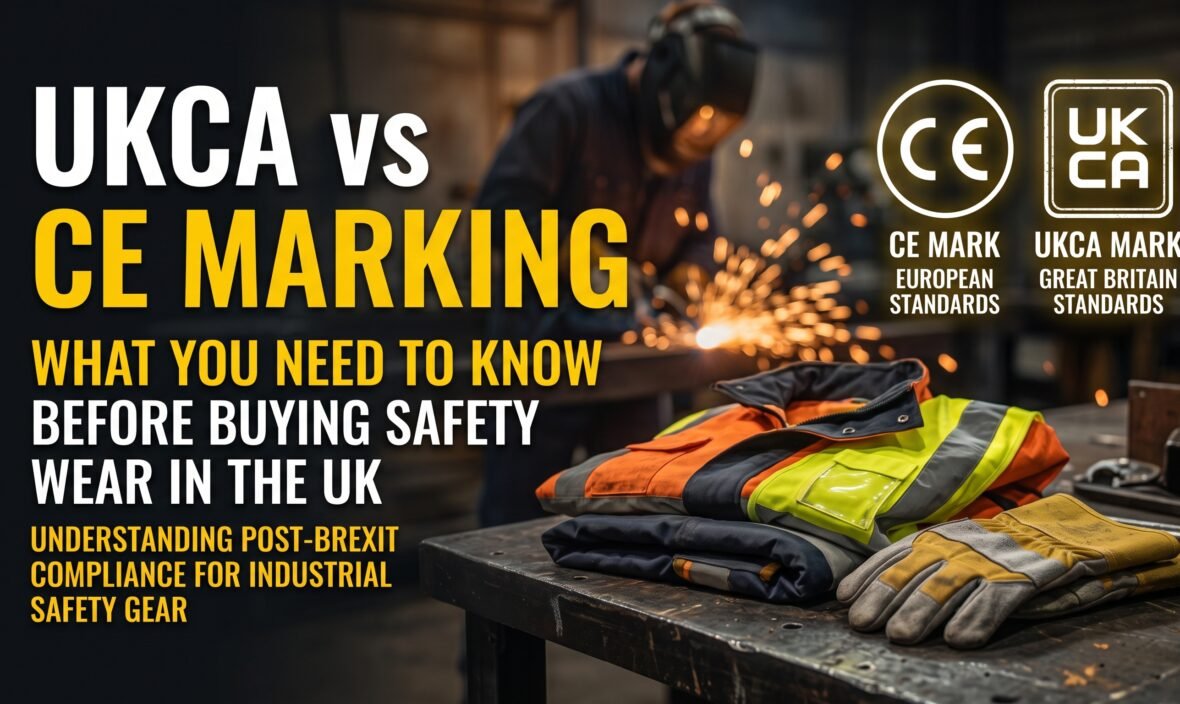
Since the UK’s departure from the European Union, the landscape of product safety and certification has undergone a major shift. For safety managers, procurement officers, and businesses buying industrial protective equipment, navigating these changes is crucial to staying legally compliant and keeping workers safe.
If you are purchasing safety wear—such as welding gloves, safety jackets, or impact gear—for use in the UK or Europe, you will now see two main certification marks: CE and UKCA.
But what exactly is the difference, and which one do you need? Here is everything you need to know before placing your next PPE order.
What is the CE Marking?
The CE (Conformité Européenne) mark has been the standard indicator of product safety across the European Economic Area (EEA) for decades.
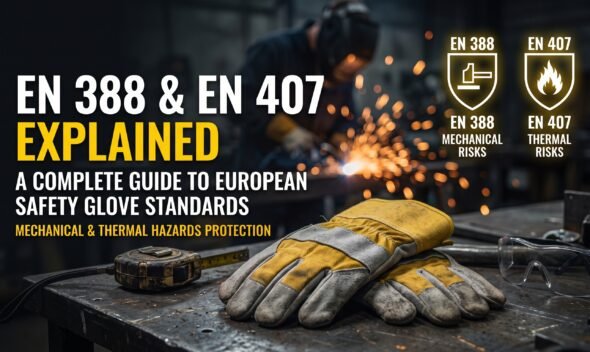
When a safety product, such as a pair of TIG/MIG welding gloves or a fire-retardant safety jacket, carries the CE mark, it means the manufacturer has verified that the product meets EU safety, health, and environmental protection requirements (such as the EN 388 and EN 407 standards).
- Where is it valid? The CE mark is legally required for selling PPE in all 27 EU member states, plus countries in the EEA.
What is the UKCA Marking?
The UKCA (UK Conformity Assessed) mark is the new post-Brexit product marking requirement introduced by the UK government. It replaces the CE mark for most goods being placed on the market in Great Britain (England, Wales, and Scotland).
The technical requirements, testing procedures, and standards for the UKCA mark are currently almost identical to those for the CE mark. The primary difference is simply the regulatory body overseeing the certification.
- Where is it valid? The UKCA mark applies specifically to the market in Great Britain. (Note: Northern Ireland has its own specific rules and continues to accept the CE mark or the UKNI mark).
Key Rules for Buying Safety Wear in the UK
If your workforce operates in the UK, here is what you need to keep in mind when ordering industrial safety gear:
1. Dual Stamping is Common To serve both UK and European markets without supply chain disruptions, many high-quality PPE manufacturers now dual-stamp their products. This means you will often see both the CE and UKCA marks printed on the labels of safety shirts, coveralls, and welding aprons. Buying dual-marked gear is the safest bet if your company operates across both regions.
2. Legal Responsibility of the Employer In the UK, it is the employer’s legal responsibility under health and safety regulations to provide workers with compliant PPE. Supplying uncertified safety wear not only puts workers at risk of severe burns, cuts, or mechanical injuries but also opens your business up to heavy fines and legal liabilities.
3. Watch Out for Fake Certifications With changes in regulations, the market often sees an influx of cheap, non-compliant products bearing fake logos. Always request technical data sheets or declarations of conformity from your supplier. Authentic safety gear will clearly state its testing results (like abrasion or heat resistance levels) alongside the official UKCA or CE marks.
Equip Your Workforce with Fully Compliant Gear
Navigating international safety standards doesn’t have to be complicated. When selecting protective clothing for high-risk environments like mining, welding, or heavy manufacturing, the most important step is partnering with a manufacturer that rigorously tests its products.
Our premium range of industrial safety wear—including heavy-duty welding jackets, mechanical gloves, and high-visibility safety vests—is engineered to meet and exceed strict international safety compliance requirements. We ensure that every piece of protective equipment offers maximum durability, thermal protection, and mechanical resistance so your workforce can operate with complete confidence.
Explore Our Full Collection of Safety Wear or Contact Our Team to discuss compliance requirements for your next bulk order.

Leave a comment